What is Mazu goddess in Vietnamese?

Mazu goddess in Vietnamese
In Vietnam, the sea goddess Mazu is widely recognized as Thiên Hậu. Her worship highlights the cultural and spiritual connections between Vietnam and China, emphasizing a deep-rooted maritime tradition. Mazu’s role as a guardian deity resonates strongly with coastal communities who depend on the sea for their livelihood.
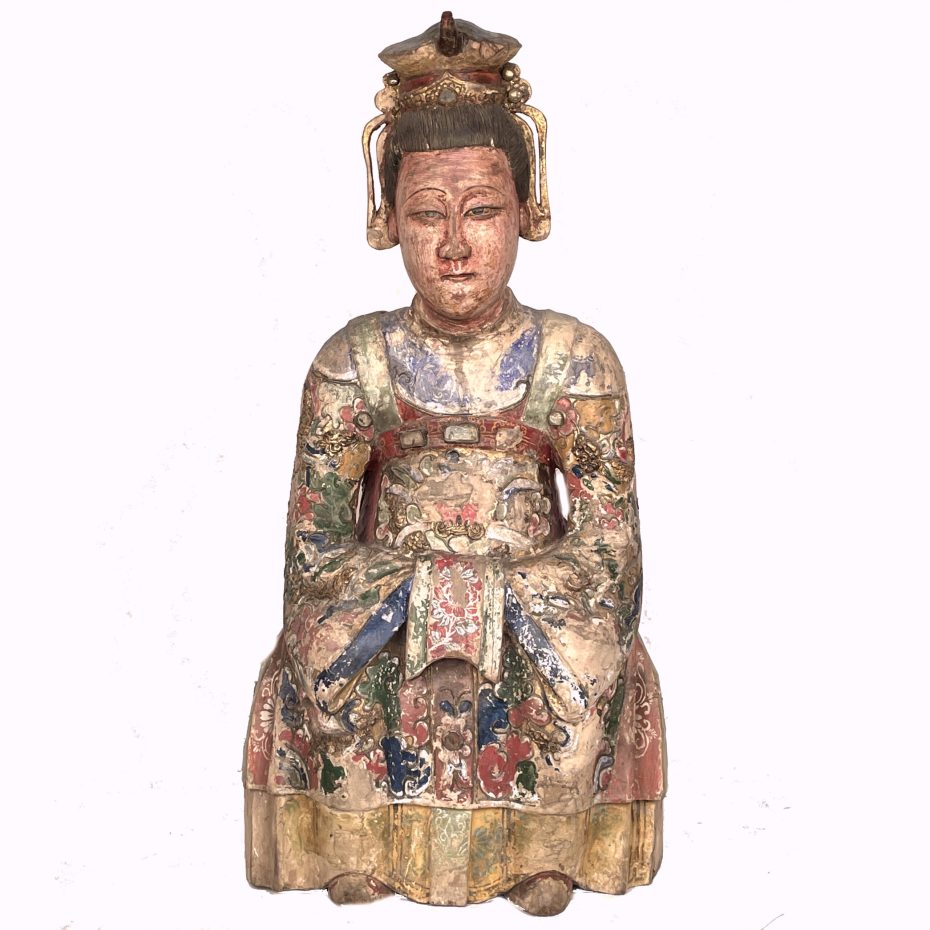
Mazu as Thiên Hậu: The Vietnamese Connection
The Vietnamese worship Mazu as Thiên Hậu, often referred to as the “Queen of Heaven.” Her image can be found in numerous temples across the country, where she is venerated as a divine protector of those who navigate the seas. Her influence is particularly notable in southern Vietnam, where communities have historically engaged in extensive maritime activities.
Cultural Significance and Celebrations
The reverence for Thiên Hậu in Vietnam is marked by vibrant festivals and rituals. One of the most significant celebrations is the annual Thiên Hậu Festival, which draws thousands of devotees to her temples. During this festival, followers engage in traditional practices such as offering incense, performing lion dances, and participating in processions to honor the goddess. These events not only celebrate her protective powers but also reinforce communal ties and cultural identity.
The Legend of Mazu in Vietnam
The legend of Mazu as Thiên Hậu parallels her Chinese origins, portraying her as a benevolent figure who assists those in peril at sea. According to Vietnamese folklore, Mazu’s spirit is believed to manifest in times of need, guiding sailors safely back to shore. Her story has been passed down through generations, serving as a source of inspiration and hope for those who rely on the ocean.
Mazu’s Enduring Impact
Mazu’s impact in Vietnam extends beyond religious devotion, reflecting broader cultural and historical connections with China. Her presence in Vietnamese temples underscores a shared heritage that transcends borders, illustrating how spiritual beliefs can foster unity and understanding among different cultures.

