What does Mazu look like?

What Does Mazu Look Like?
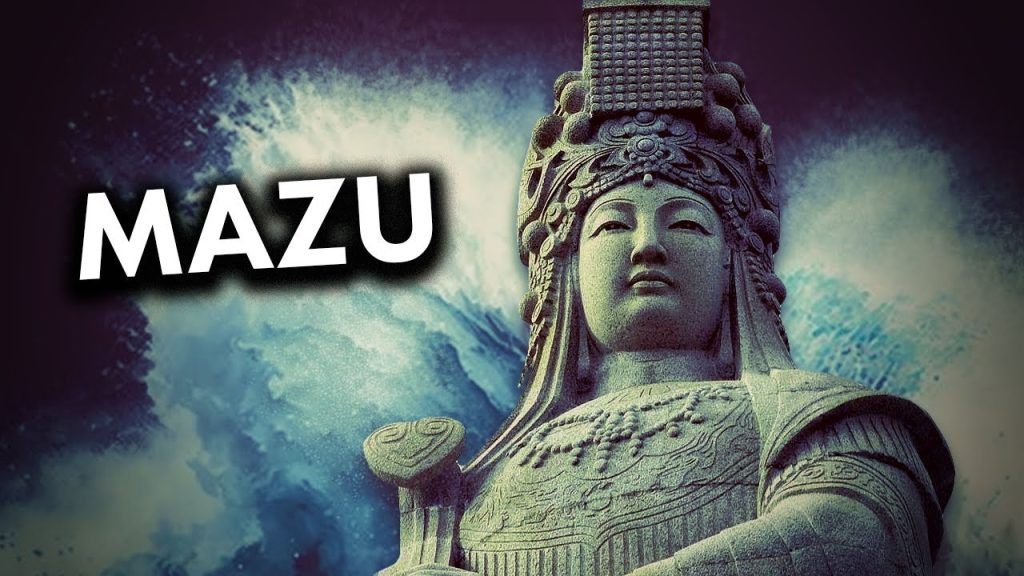
In Chinese mythology, Mazu is a revered sea goddess known for her compassionate protection over sailors, fishermen, and travelers. Her visual depictions are rich in symbolism and vary across different artistic representations, yet certain elements remain consistent, reflecting her divine status and maritime association.
Traditional Depictions

Mazu is often portrayed wearing bright red robes adorned with shining jewels. These robes not only signify her divine status but also help make her visible to those at sea, symbolizing her protective nature. In many artworks, she holds a ceremonial tablet, representing her spiritual knowledge and authority. Additionally, she is frequently depicted wearing an imperial headdress, further emphasizing her role as a celestial figure.
Guardians and Symbolism

Mazu is commonly accompanied by her two guardian demons, Qianliyan (千里眼, “Eyes That Can See One Thousand Miles”) and Shunfeng’er (顺风耳, “Ears That Can Hear the Wind”). These guardians are often depicted at the entrance of her temples, symbolizing their role in assisting and protecting Mazu. Qianliyan is typically shown with a red complexion and two horns, while Shunfeng’er is depicted with a green complexion and one horn (Wikipedia).
Artistic Representations

Artistic representations of Mazu can be found in various forms, including paintings, statues, and temple carvings. She is sometimes depicted standing on waves or clouds, reinforcing her connection to the sea and her ability to control the elements. Her serene and benevolent expression in these artworks reflects her role as a compassionate protector and motherly figure .
Influence on Culture

Mazu’s image and story have had a significant impact on Chinese culture, particularly in coastal communities. Her depictions not only serve religious purposes but also influence local art and literature. Mazu is often portrayed in scenes that highlight her miraculous interventions at sea, her dedication to saving lives, and her spiritual prowess. These portrayals have cemented her status as a beloved and powerful deity in both historical and contemporary contexts.

